
"Do I Have to Join Your Concierge Practice to See You for Weight Loss?"
No. At Prestige Weight Loss & Wellness, medical weight loss is a separate service, and patients do not need to join the concierge membership to receive it.
The practice offers both concierge primary care and medical weight loss. Below, each is explained using definitions from Medicare, the National Institutes of Health and other public sources, along with general information about how weight-loss medicines are covered.
What a concierge membership is
Medicare.gov defines concierge care as “when a doctor or group of doctors charges you a membership fee before they’ll see you or accept you into their practice.” It is also called concierge medicine, retainer-based medicine, boutique medicine, platinum practice or direct care.1
The American Medical Association’s Code of Medical Ethics says physicians who enter into retainer contracts must ensure that patients’ decisions to accept them are voluntary and that patients are free to opt out of entering into a retainer agreement.2
What medical weight management involves
“Our American Medical Association recognizes obesity as a disease state with multiple pathophysiological aspects requiring a range of interventions to advance obesity treatment and prevention.”AMA policy H-440.842, adopted in 20133
According to the National Institute of Diabetes and Digestive and Kidney Diseases (NIDDK), health care professionals most often treat overweight and obesity by helping patients adopt lifestyle changes. NIDDK’s overview of treatment also covers tailored weight-loss programs, weight-loss medicines, weight-loss surgery and weight-loss devices. It notes that a health care professional may refer a patient to a specialist or a health care team trained in weight management.4
In a 2018 recommendation graded B, the U.S. Preventive Services Task Force recommends that clinicians offer or refer adults with a body mass index (BMI) of 30 or higher to intensive, multicomponent behavioral interventions. The Task Force’s website notes that this topic is being updated.5
The CDC uses these BMI categories for adults 20 and older:6
| Category | BMI |
|---|---|
| Underweight | Less than 18.5 |
| Healthy weight | 18.5 to less than 25 |
| Overweight | 25 to less than 30 |
| Obesity | 30 or greater |
| Class 1 obesity | 30 to less than 35 |
| Class 2 obesity | 35 to less than 40 |
| Class 3 obesity (severe obesity) | 40 or greater |
The CDC also states that “BMI is a screening measure and is not intended to diagnose disease or illness.”7
Medicines that can affect weight
NIDDK states that “some medicines can affect your energy balance by making you hungry or making your body burn fewer calories.” Its examples include:8
- Some medicines used to treat epilepsy, depression or psychotic disorders
- Corticosteroids, also called steroids
- Some diabetes medicines, such as insulin and sulfonylureas
- Some medicines used to treat high blood pressure, such as beta-blockers, alpha-blockers and calcium channel blockers
- Some antihistamines used to treat allergy symptoms
The list describes medicines that may contribute to weight gain. It does not say that any of them should be stopped or changed.8
Who prescription weight-management medicines are for
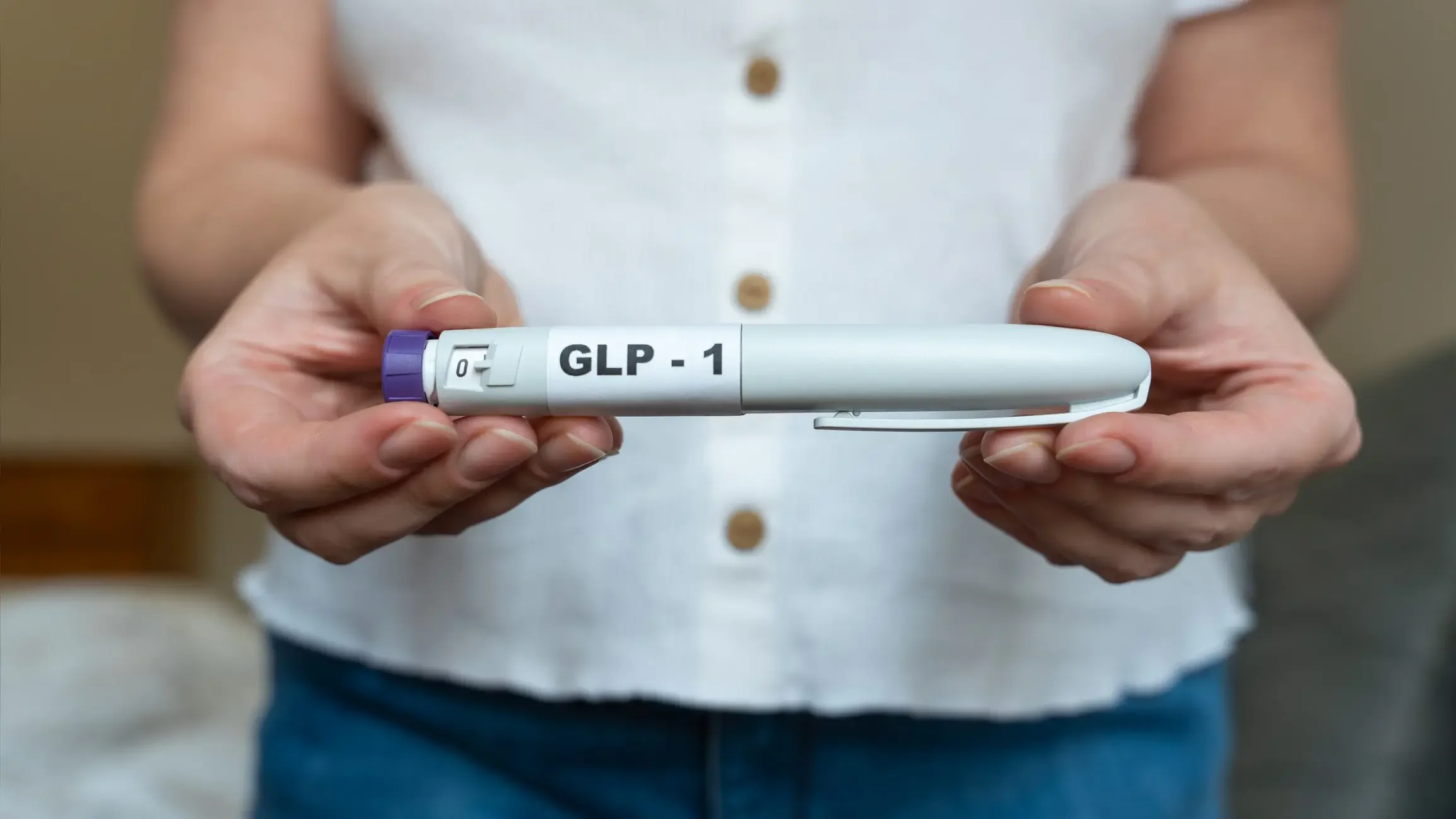
NIDDK states that a health care professional may prescribe a medicine to treat overweight or obesity for an adult with a BMI of 30 or greater, or a BMI of 27 or greater with weight-related health problems such as high blood pressure or type 2 diabetes.9 The prescribing information for GLP-1 weight-management medicines such as semaglutide and tirzepatide states that they are for use in combination with a reduced-calorie diet and increased physical activity.10,11
Insurance coverage for weight-loss medicines
NIDDK states: “Some, but not all, insurance plans cover medications that treat overweight and obesity.”9
In KFF’s 2025 Employer Health Benefits Survey, 19% of large firms (those with at least 200 workers) offering health benefits said they cover GLP-1 drugs for weight loss; 57% said they do not, and 24% were unsure. Among firms with at least 5,000 workers, 43% said they cover GLP-1 drugs for weight loss in their largest plan, up from 28% in 2024.12
For Medicare, KFF reports that “Medicare has been prohibited by law from covering medications when used specifically for weight loss.” Part D plans can cover GLP-1 drugs when they are used for another medically accepted, FDA-approved indication, such as type 2 diabetes, cardiovascular disease risk reduction or sleep apnea.13
Separately, the Centers for Medicare & Medicaid Services (CMS) runs the Medicare GLP-1 Bridge from July 1, 2026, through December 31, 2027. Under it, eligible Medicare Part D beneficiaries have a $50 copay for certain GLP-1 drugs. The program uses prior authorization, and in 2026 CMS uses a single central processor to manage prior authorization, claims and payment to pharmacies. CMS directs beneficiaries to Medicare.gov/glp1bridge to check eligibility.14
How it works at Prestige Weight Loss & Wellness
Concierge primary care and medical weight loss are separate services at the practice. A patient can use the medical weight loss service without joining the concierge membership. The office can answer questions about how the weight loss service is billed. Learn more about medical weight loss or concierge primary care.
Schedule a consultation or call the office at (954) 771-0611.
Frequently asked questions
Do I need a concierge membership to start medical weight loss at Prestige Weight Loss & Wellness?
No. Medical weight loss is a separate service at Prestige Weight Loss & Wellness, and patients do not need to join the concierge membership to receive it.
What is concierge care?
Medicare.gov defines concierge care as when a doctor or group of doctors charges a membership fee before they will see a patient or accept the patient into their practice. Medicare.gov also states that Medicare does not cover membership fees for concierge care.1
Does insurance cover weight-loss medications?
NIDDK states that some, but not all, insurance plans cover medications that treat overweight and obesity.9 In KFF’s 2025 Employer Health Benefits Survey, 19% of large firms (those with at least 200 workers) offering health benefits said they cover GLP-1 drugs for weight loss, and 24% were unsure.12
Does Medicare cover GLP-1 drugs for weight loss?
KFF reports that Medicare has been prohibited by law from covering medications used specifically for weight loss.13 Under the CMS Medicare GLP-1 Bridge, which runs from July 1, 2026, through December 31, 2027, eligible Medicare Part D beneficiaries have a $50 copay for certain GLP-1 drugs, with prior authorization.14
Sources
- Medicare.gov. Concierge care. Centers for Medicare & Medicaid Services. medicare.gov
- American Medical Association. Code of Medical Ethics, Opinion 11.2.5: Retainer Practices. code-medical-ethics.ama-assn.org
- American Medical Association. Policy H-440.842, Recognition of Obesity as a Disease (Res. 420, A-13; reaffirmed A-23), as quoted in AMA House of Delegates Resolution 421 (A-24). ama-assn.org (PDF)
- National Institute of Diabetes and Digestive and Kidney Diseases. Treatment for Overweight & Obesity. Last reviewed May 2023. niddk.nih.gov
- U.S. Preventive Services Task Force. Weight Loss to Prevent Obesity-Related Morbidity and Mortality in Adults: Behavioral Interventions. Final recommendation, September 18, 2018. uspreventiveservicestaskforce.org
- Centers for Disease Control and Prevention. Adult BMI Categories. cdc.gov
- Centers for Disease Control and Prevention. Adult BMI Calculator. cdc.gov
- National Institute of Diabetes and Digestive and Kidney Diseases. Factors Affecting Weight & Health. Last reviewed May 2023. niddk.nih.gov
- National Institute of Diabetes and Digestive and Kidney Diseases. Prescription Medications to Treat Overweight & Obesity. Last reviewed June 2024. niddk.nih.gov
- Wegovy (semaglutide) injection and tablets. Prescribing information. DailyMed, National Library of Medicine. dailymed.nlm.nih.gov
- Zepbound (tirzepatide) injection. Prescribing information. DailyMed, National Library of Medicine. dailymed.nlm.nih.gov
- KFF. Annual Family Premiums for Employer Coverage Rise 6% in 2025, Nearing $27,000, with Workers Paying $6,850 Toward Premiums Out of Their Paychecks. News release on the 2025 Employer Health Benefits Survey, October 22, 2025. kff.org
- Freed M, Cubanski J, Williams E. What to Know About the BALANCE Model for GLP-1s in Medicare and Medicaid and the Medicare GLP-1 Bridge. KFF, May 11, 2026. kff.org
- Centers for Medicare & Medicaid Services. Medicare GLP-1 Bridge. cms.gov
This article is for general information only and is not medical advice. It does not replace a conversation with a licensed health care professional about your own health. Do not start, stop or change a prescribed medication without talking to your prescriber. In an emergency, call 911.